Innovations and techniques in modular construction
Tishman Speyer, a leader in global real estate, adopts innovative modular construction techniques to improve the efficiency and sustainability of its projects. Utilizing high-quality materials and advanced digital technologies, these methods reduce construction times and minimize costs. The company's modular and sustainable initiatives set new standards in terms of performance and environmental respect.
The construction industry is constantly evolving, with new processes and materials promising to radically transform the urban landscape. Among the companies at the forefront of this revolution is Tishman Speyer, a major player in the global real estate sector. This company has successfully integrated innovative modular construction techniques to improve both the efficiency and sustainability of its projects.
Modular construction, often perceived as a solution imported from the manufacturing industry, consists of prefabricating complete or partial modules in a controlled environment before assembling them on site. This process offers many advantages, including a significant reduction in construction time, cost savings, and minimizing site disruptions.
Tishman Speyer uses durable and high-quality materials in its modules, ensuring the longevity of structures and enhanced energy performance. Insulating panels, high-performance glazing, and integrated energy systems all play a key role in optimizing the performance of modular buildings. Indeed, these innovations meet strict environmental standards and the growing expectations of investors and occupants regarding sustainability.
Another important aspect of Tishman Speyer's modular strategy is the use of digital technology for the design and manufacture of modules. The use of Building Information Modeling (BIM) allows the creation of detailed and accurate plans. This approach reduces errors and last-minute changes while improving coordination among different stakeholders. Consequently, the production chain becomes smoother, and delivery times are shortened.
The assembly of prefabricated modules on site is generally completed in a few weeks, a fraction of the time required by traditional construction methods. This time saving is particularly valuable in dense urban environments where construction timelines must be limited to reduce disturbances to residents and optimize developers' return on investment.
In terms of sustainability, the modules can be designed to integrate green technologies such as solar panels, rainwater harvesting systems, and charging stations for electric vehicles. All this without compromising the comfort and functionality of the buildings.
Tishman Speyer's initiative in modular construction represents a significant advancement in the real estate sector, combining architectural efficiency and ecological commitment. These innovative methods produce more efficient and responsible buildings, thus meeting the complex needs of modern society while respecting the environment.
Sources
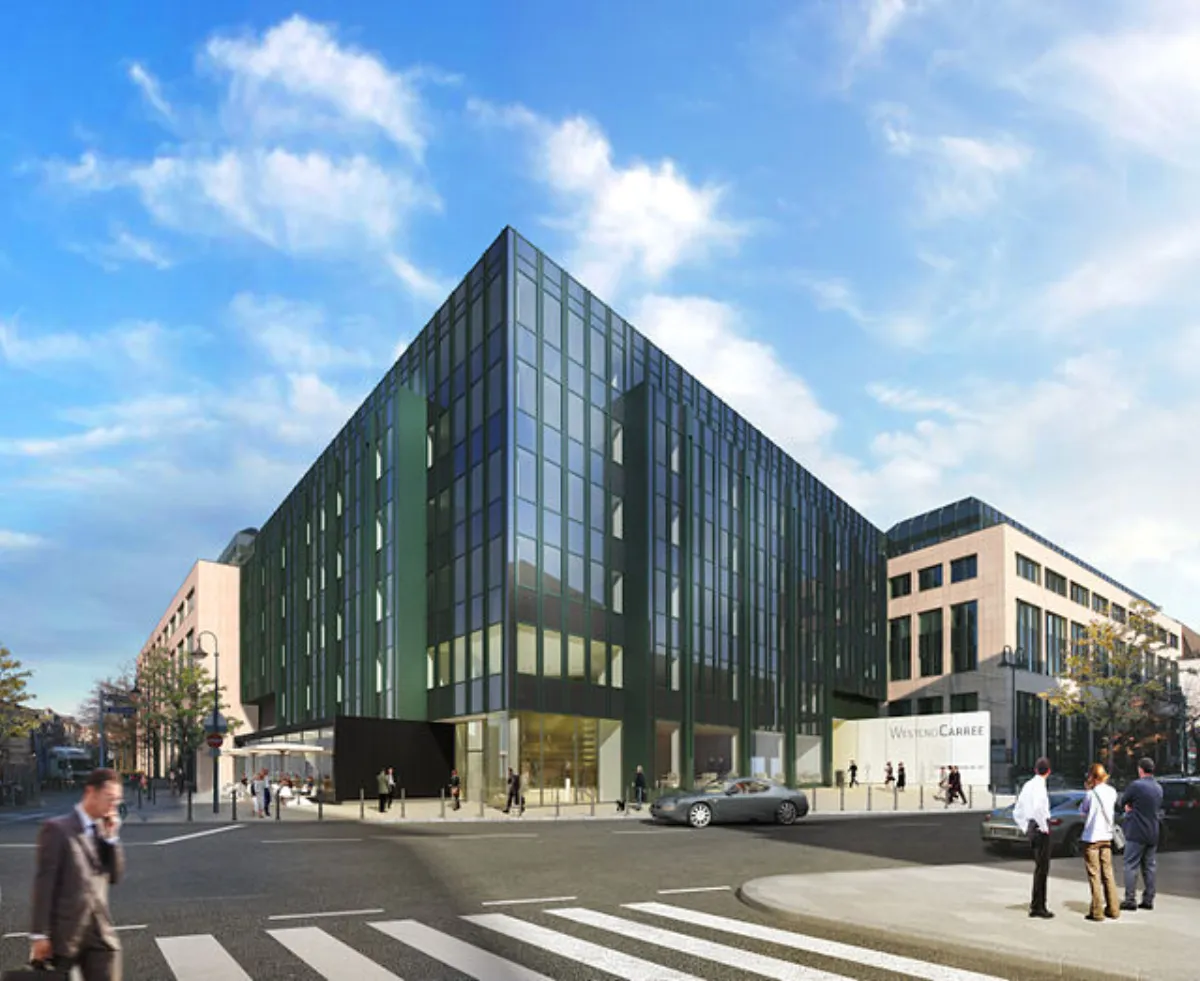
Image credits : The Westend Carree development, built by Tishman Speyer. https://commons.wikimedia.org/wiki/File:080630_wec_hero_shot_neu.jpg / https://commons.wikimedia.org/wiki/File:MIRA_under_contruction_-_160_Folsom,_San_Francisco.jpg